
How Arrest Warrants Work in Dundy County
An arrest warrant is a judge's order to bring an accused person before the issuing court. Nebraska law directs the warrant to the sheriff, or to a city or village marshal where one applies. The court that issued it keeps control of the accusation, the bond instructions, and any later recall or quash. That is where Dundy County residents should confirm status. Use JUSTICE to find the case and see whether it sits in County Court or District Court. The Sheriff's public page posts no warrant roster. So direct confirmation with the clerk stays necessary no matter what a search returns.
What Nebraska Arrest Warrants Put in the Record
Nebraska Revised Statute section 29-406 governs what goes into a warrant. It must state the substance of the accusation. It must command the officer to bring the accused before the proper court or magistrate. The statute is legal text, not a live Dundy County case result. For local routing, the District Court page helps. It lists the District Clerk and the shared courthouse contact rather than any warrant roster. Ask those offices directly about an active warrant.
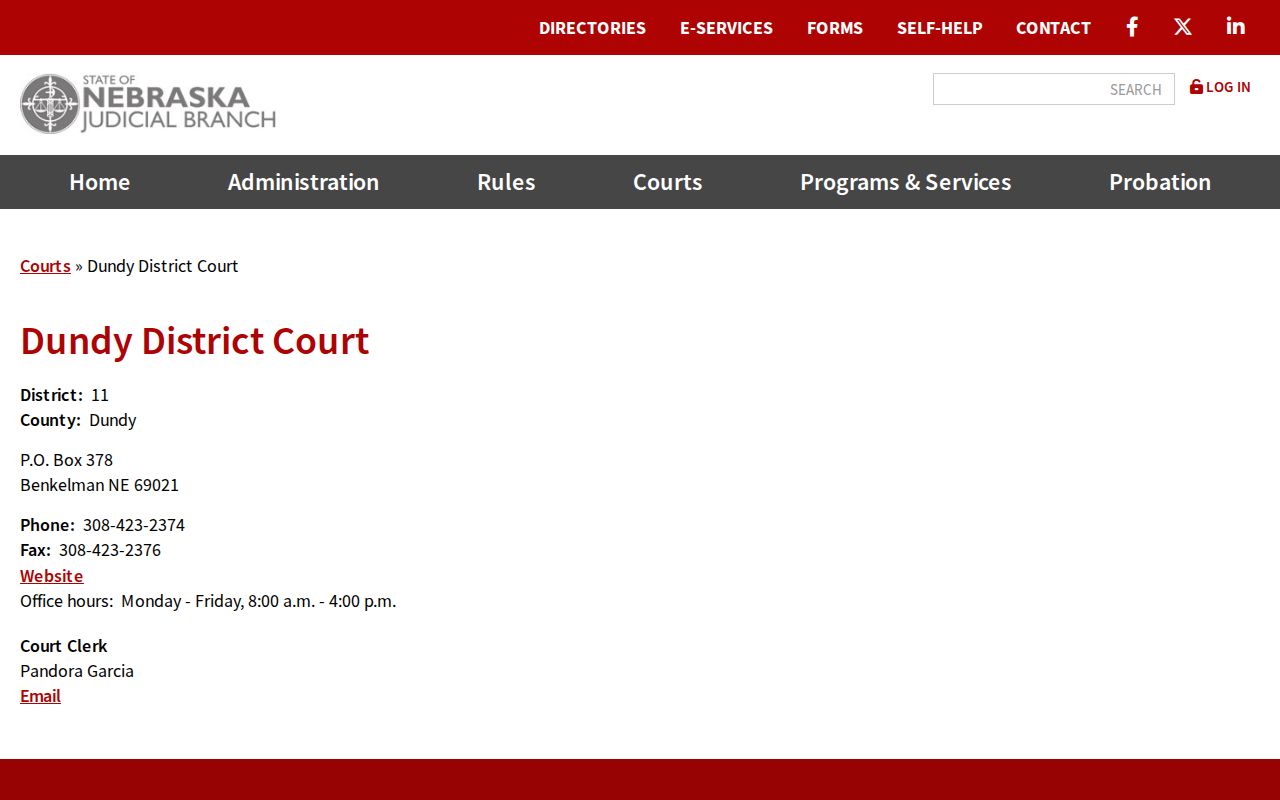
Read the Nebraska statute itself, and use the Dundy County court page for local contact routing.
Arrest Warrants: What They Contain
Dundy County publishes no public arrest-warrant listing. Ask the clerk whether a case file exists and which of its fields the public may see.
| Case number | Exact court identifier. |
|---|---|
| Warrant or order type | Arrest warrant, bench warrant, FTA order, or another label. |
| Accusation or statute | Substance of the complaint and offense classification, if public. |
| Issuing court and judge | Court level and judicial officer. |
| Issue date | Date the order was entered. |
| Bond or release | Current condition, if ordered and available. |
| Service and return | Officer or agency action reported back to court. |
No Dundy County warrant-number format is published. The clerk reads the number straight from the docket, so rely on that office.
From Complaint to Dundy County Court Process
A complaint or a showing of probable cause can start the process. In Dundy County, County Court holds preliminary hearings in felony cases and most misdemeanor, traffic, and ordinance matters. A felony may then move to District Court. So your first contact and the later trial court can be two different offices in the same case.
Call the Dundy County court named in the JUSTICE record rather than asking the Sheriff to explain a warrant's legal status.
How Warrants Get Served in Dundy County
Nebraska law lets a warrant run to the county sheriff or, where it applies, a city or village officer. In practice, the Dundy County Sheriff's Office is the public contact for county process. It also runs the county jail and communications. Its page promises no warrant counter, walk-in surrender program, or bond window, so nothing there substitutes for a call. The office number is (308) 423-2393. Listed hours run 8:00 a.m. to 4:00 p.m. on weekdays, open through lunch, closed weekends and holidays. Call before you show up. Ask which entrance, booking instruction, or agency contact applies to your warrant situation in Dundy County.
Who May Serve Dundy County Warrants
Section 29-407 covers who executes a warrant. It also covers assistance from sheriffs and others. Section 29-412 governs bringing an arrested person before a magistrate and returning the process. Neither rule names the current agency assignment for every Dundy County village or ordinance matter, so confirm with the office itself.
| Possible agency | Role in the research | What remains to confirm |
|---|---|---|
| Dundy County Sheriff | County law-enforcement service, jail, and communications. | Current service or surrender instructions. |
| City or village officer | May receive a warrant directed under state law. | Whether a local agency operates in the particular municipality. |
| U.S. Marshals | Federal fugitive and warrant service. | Federal process only, outside county lookup. |
Ask the issuing court which officer or agency has the return.
Arrest Warrants, Summonses, and Bench Warrants
A summons simply asks you to appear. A bench warrant is a judge's arrest order, usually tied to a missed court date or a violated order. An arrest warrant grows out of an accusation and a probable-cause finding. The three terms blur in everyday talk in Dundy County, but the court record and its required response are what count.
| Process | Core question | Local next call |
|---|---|---|
| Summons | When and where must the person appear? | Issuing court. |
| Bench warrant | What court event or order led to arrest process? | County Court or District Clerk. |
| Arrest warrant | What accusation and probable-cause record support it? | Issuing court, then Sheriff for service. |
If the Dundy County record centers on a missed appearance, use the Dundy County bench warrant lookup page.
Public Filing and Sealed Arrest Material
Probable-cause affidavits often become public once filed. A judge can still seal material for good cause. Search-warrant applications and affidavits get special protection before execution under section 29-817, and juvenile records and other statutory exceptions can stay closed even in Dundy County.
Access reminder: A missing document or case result can reflect sealing, juvenile restrictions, filing timing, or another legal limit. Ask the court which rule applies.
The Judicial Rule 6-1472 material explains the filing and sealing rules; it will not reveal any Dundy County warrant.
Handling an Arrest Warrant in Your Name
Find the case in JUSTICE first. Then call the issuing clerk in Dundy County and ask whether counsel can arrange a surrender, an appearance, or a bond request. Follow up with the Sheriff on service and booking logistics. The county publishes no safe-surrender policy, bond schedule, or bond form, so get each step in writing from the court.
Get advice first: Do not guess whether payment, a phone call, or a walk-in visit will clear an arrest warrant. Ask a Nebraska attorney and the issuing court.
Once the Dundy County court acts, request a written order or docket confirmation. Ask the Sheriff whether the service entry has changed and how you can verify that change yourself.
Dundy County and Federal Arrest Process
Federal warrants do not show up in Nebraska JUSTICE. Dundy County sits inside the U.S. District Court for the District of Nebraska, and federal fugitive service runs through a separate system. PACER is a docket service, not a warrant roster. Sealed or unexecuted process may not appear there at all. For federal routing, use the U.S. District Court for Nebraska or the U.S. Marshals District of Nebraska. A clean Dundy County result is not federal clearance, so check both systems.